A Simple Daily Routine to Limit YouTube Shorts and Improve Focus
A simple daily routine to limit YouTube Shorts and improve focus. Exact times, limits, and tools to make every step automatic and stop losing hours.
Content
- Introduction
- Why a Daily Routine Beats Willpower for Shorts
- A Daily Routine to Limit YouTube Shorts, Hour by Hour
- How to Set Up the Routine With Obserra
- How to Stick With the Routine
- Frequently Asked Questions
- Conclusion
Introduction
You open YouTube to watch one Short while the kettle boils. Forty minutes later the water is cold and your morning is gone. Shorts are engineered to make that happen: no stopping points, an instant next video, and a feed that always knows what pulls you in.
Telling yourself to "watch less" won't fix that. What works is a daily routine to limit YouTube Shorts: fixed times when Shorts are allowed, fixed times when they aren't, and limits that enforce the whole thing for you. This guide gives you a realistic hour-by-hour routine, then shows you how to set it up so it runs automatically instead of depending on willpower at the exact moment you're weakest.
Why a Daily Routine Beats Willpower for Shorts
Every Short you watch is a small decision, and every decision is a chance to keep watching. A long-form video at least has an ending. Shorts don't. There is no natural pause where you stop and ask yourself whether you should continue, so the default answer is always "next one".
A routine works because it makes the decision before you ever open the app. When Shorts are simply unavailable between 9 and 5, you never spend the day negotiating with yourself. The choice was made once, in advance, by a calmer version of you.
There's real science behind this too. A 2026 brain imaging study found that immersive short-video viewing reduces activity in the regions responsible for monitoring and self-control, which is why stopping mid-scroll feels so hard. We covered what that study does and doesn't prove in our article on the brain research behind Shorts.
A Daily Routine to Limit YouTube Shorts, Hour by Hour
This routine limits distractions from YouTube Shorts while still leaving you a deliberate window to enjoy them. Adjust the times to fit your own schedule; the structure is what matters.
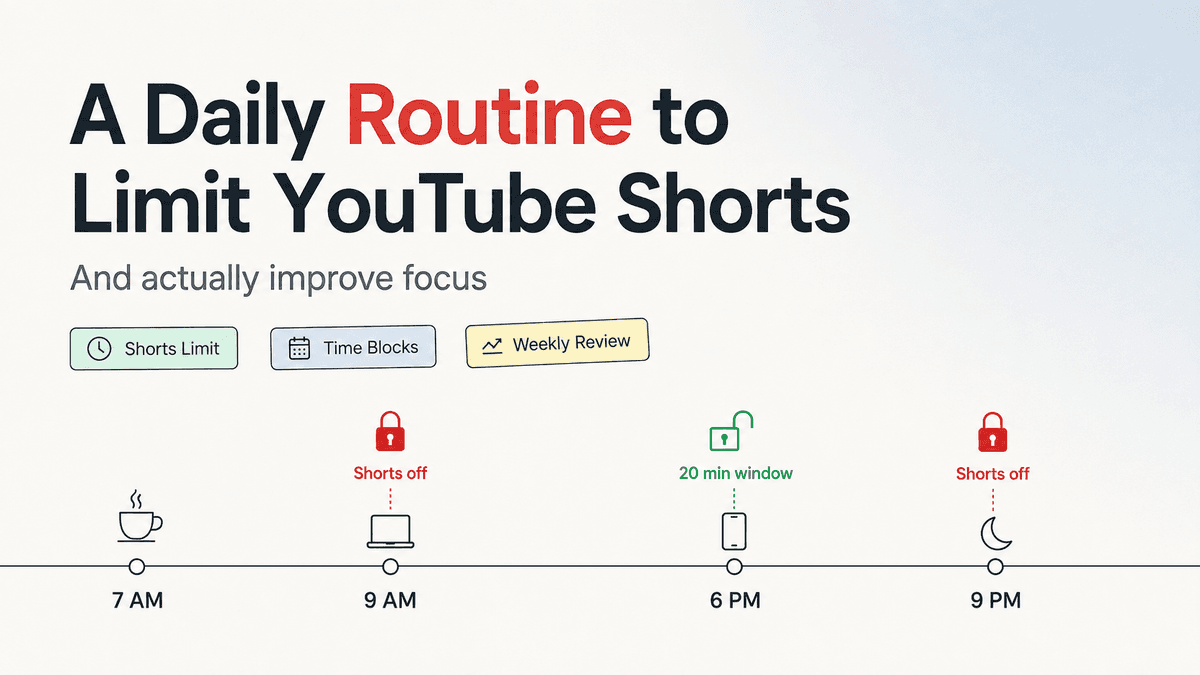
Morning (7:00 to 9:00): no Shorts
The first hour of your day sets the tone. If you start with Shorts, you start the day in scroll mode, and that mode is hard to leave. Keep the first hour screen-free where you can, and don't open YouTube at all before you start work or study. If you need video content in the morning, watch a specific video you chose the night before, not a feed.
Work or study hours (9:00 to 17:00): Shorts completely off
These are the hours that pay for everything else, so Shorts get zero access here. Not a limit, not a warning: off. A "quick break" that turns into twenty Shorts costs you far more than the break it replaced, because deep focus takes around twenty minutes to rebuild after an interruption.
Take real breaks instead. Walk, make a drink, stretch. If you genuinely want to watch something on a break, schedule it: one ten-minute slot after lunch rather than an open invitation all day.
Evening (18:00 to 20:00): one planned Shorts window
Banning Shorts completely works for some people, but most do better with a planned window, because a routine you can live with is a routine you keep. Pick a slot, such as twenty minutes after dinner, and treat it like an appointment. You watch on purpose, you enjoy it, and then it's done. This is where a daily Shorts limit earns its keep, since it ends the window for you without a willpower battle.
Wind-down (after 21:00): Shorts off
Shorts before bed are a double loss: you lose the sleep and you lose the quality of the sleep. Late-night feeds also tend to be the longest sessions of the day, because you're tired and your self-control is at its lowest. After 21:00, Shorts are off. If you find yourself reaching for them anyway, a grayscale filter makes the feed dramatically less tempting.
Weekly review (Sunday, 10 minutes)
Once a week, look at your actual numbers instead of guessing. How much time did Shorts take this week compared with last week? When were your longest sessions? Then adjust one limit, not all of them. Small corrections stick; dramatic overhauls don't.
How to Set Up the Routine With Obserra
The routine above only works if it enforces itself. Willpower at 23:00 is unreliable. Obserra is a free browser extension that applies every part of the routine automatically, and setup takes about ten minutes.
-
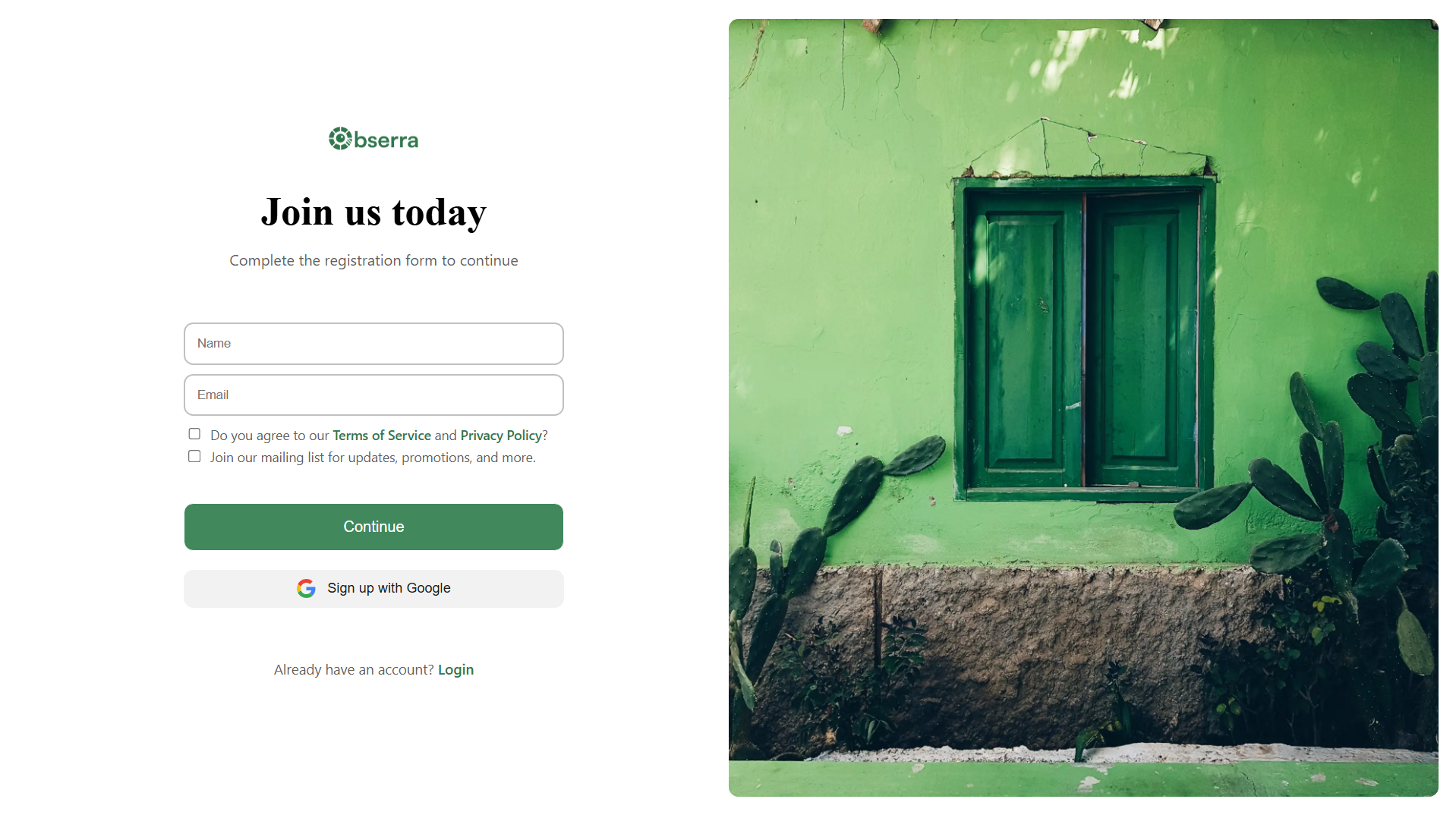
Create an account. Visit obserra.com and register with your email or Google account.
-
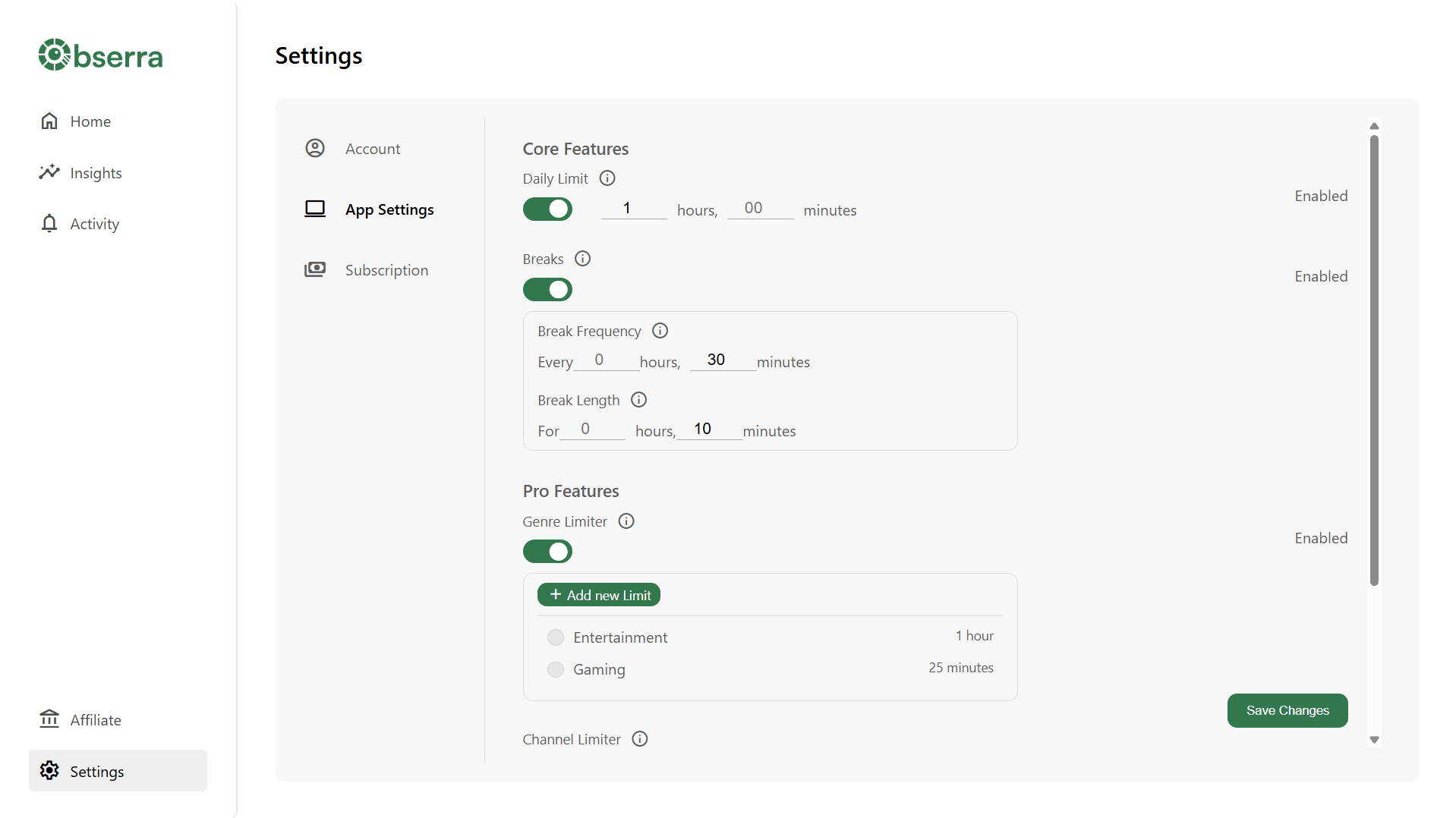
Set your Daily Shorts Limit. Open the settings page, enable Daily Shorts Limit, and set it to match your planned evening window, such as 20 minutes. Once you hit it, Shorts are blocked until the next day. If you're not sure what to choose, start at half your current average and adjust after a week.
-
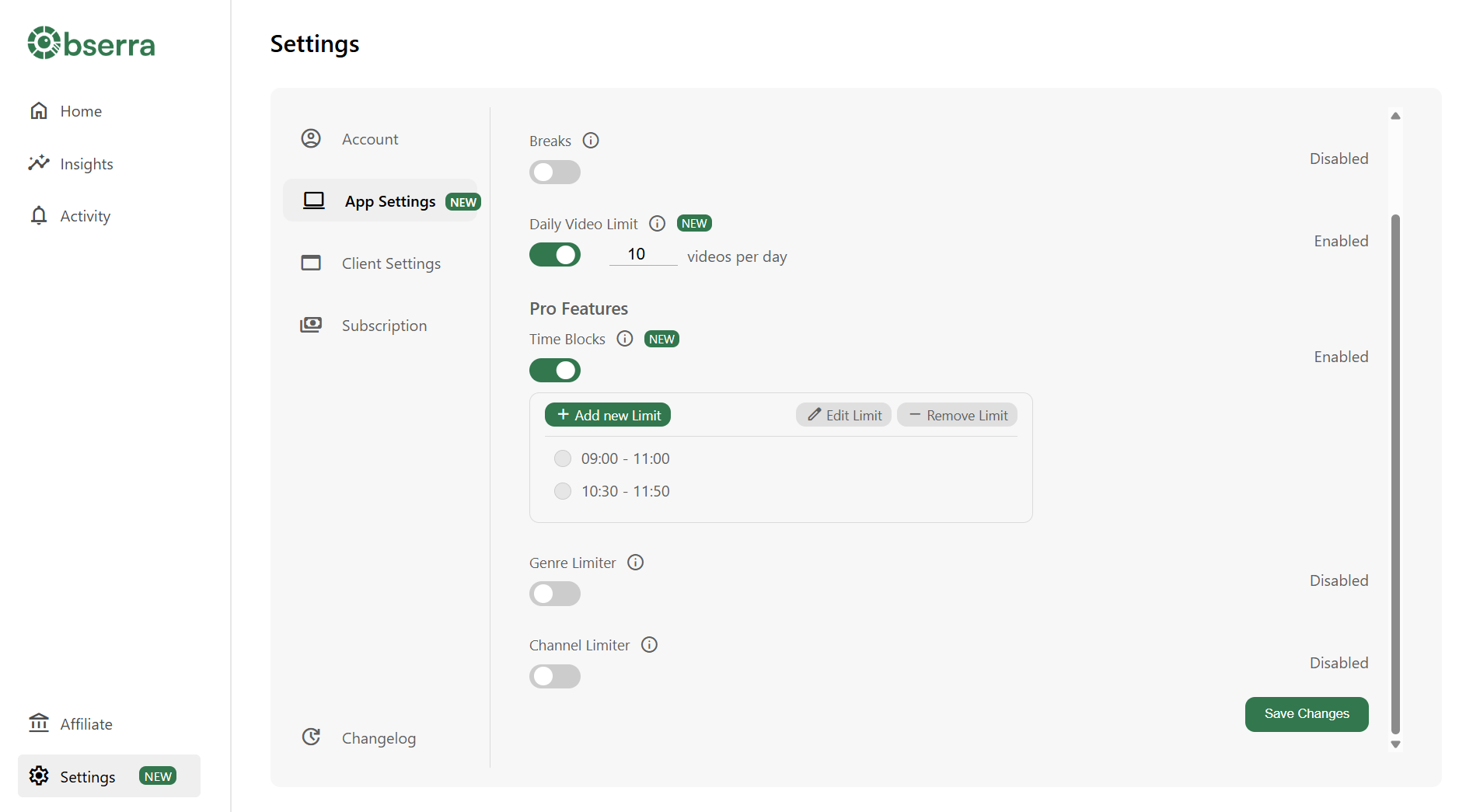
Add a Time Block for work hours. Set a block for 9:00 to 17:00 on your workdays so YouTube can't distract you during the day, even outside your Shorts allowance.
-
Remove Shorts from your feed. Enable Hide YouTube Shorts on the homepage, or Disable YouTube Shorts entirely if you'd rather not see them at all outside your window. This kills most accidental sessions before they start. We explain both options in our guide to limiting and blocking Shorts.
-
Make evenings less tempting. Turn on the Black and White Filter as part of your wind-down, or schedule it with a second Time Block after 21:00.
-
Do your Sunday review in Insights. The insights page shows your daily Shorts watch time, average session length, and peak viewing hours, which is exactly what you need for the weekly review.
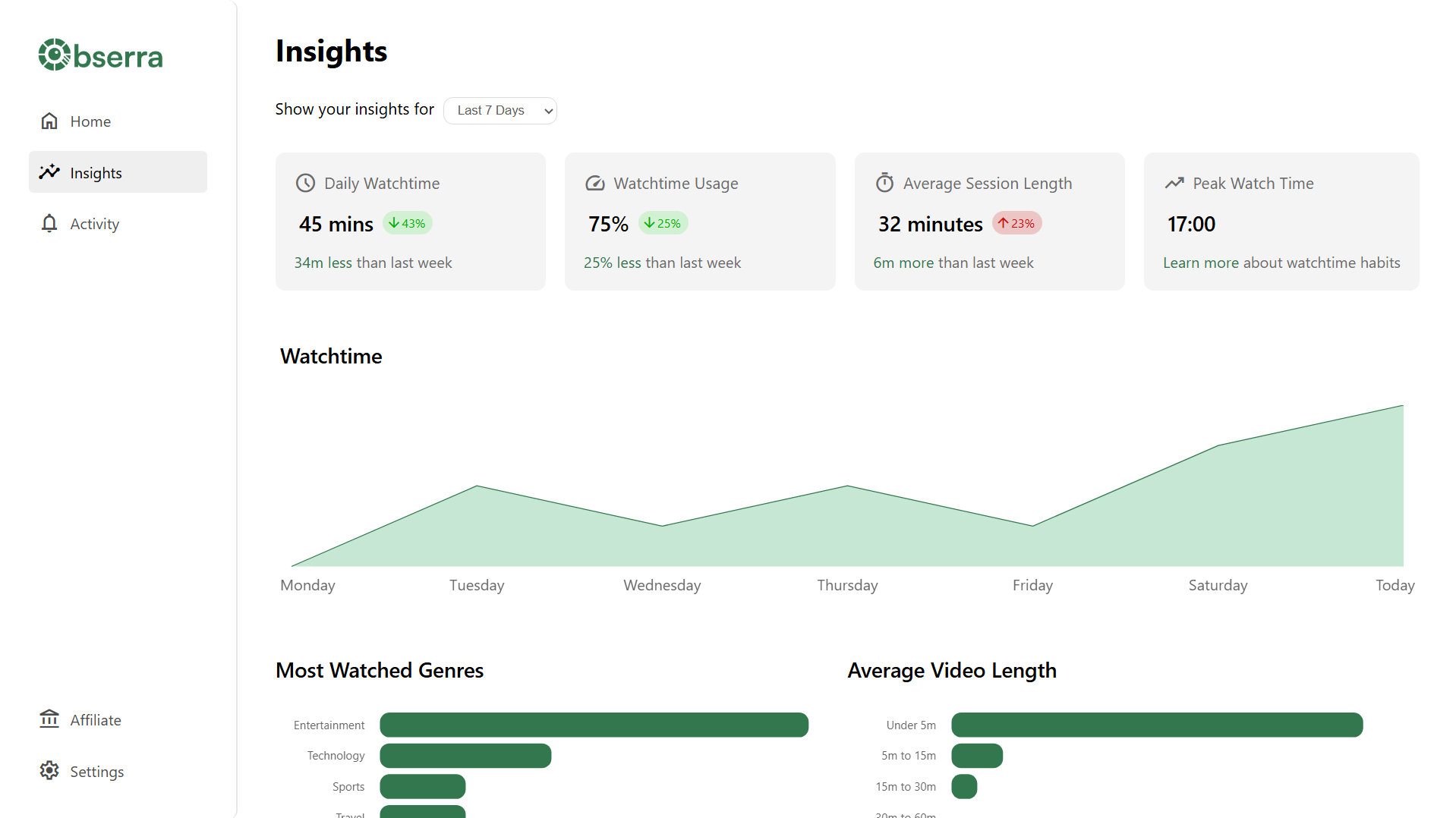
Once it's set up, the routine runs itself: Shorts are off during work, allowed for twenty minutes in the evening, off again at night, and you get a weekly report of how it's going. Create your free account to set it up in the next ten minutes.
How to Stick With the Routine
Most routines fail in the first week for predictable reasons. Here's how to avoid the usual traps:
- Start close to your current habits. If you watch two hours of Shorts a day, a twenty-minute limit will feel like punishment and you'll disable it. Start at 60 minutes, then cut it by ten each week until you reach your target.
- Replace the habit, don't just remove it. The evening Shorts window exists because you need to decompress. Decide in advance what the alternative is during blocked hours: a book by the sofa, a podcast on a walk, whatever actually appeals to you.
- Treat a bad day as data, not failure. Everyone has a day where the routine falls apart. The difference between people who succeed and people who don't is whether the next day is back on schedule. It's one day; the routine is still there.
- Change one limit at a time. If the numbers aren't moving, adjust a single setting during your Sunday review. Changing everything at once makes it impossible to know what worked.
Frequently Asked Questions
How long does it take for the routine to feel normal?
Most people stop fighting the limits within one to two weeks. The first few days are the hardest because you'll notice every blocked attempt. After that, the routine becomes the default and you stop thinking about it.
Should I just quit YouTube Shorts completely instead?
If your attempts at a moderate routine keep failing, yes. Obserra lets you disable Shorts entirely while keeping normal YouTube available, which suits people who need videos for study or work but don't want the feed. For everyone else, the planned evening window is the more sustainable starting point.
What if I break the routine one day?
Resume the next day as normal and don't try to compensate by making your limits harsher. One bad day costs you a few hours. Abandoning the routine because of it costs you the rest of the month.
How do I know the routine is working?
Check your Insights every Sunday. The three numbers that matter are daily Shorts watch time, number of sessions, and your longest session. If all three are trending down over two or three weeks, the routine is working even if it doesn't feel like it yet.
Can I have a different limit on weekends?
Yes. Since Time Blocks are set per day, you can leave evenings completely open on weekends or set a larger weekend Shorts limit, while keeping your weekday routine untouched.
Conclusion
You don't need more discipline to stop losing hours to Shorts. You need a routine that decides for you: no Shorts in the morning, none during work, one planned window in the evening, and nothing after 21:00. Set it up once so it enforces itself, review it once a week, and the hours come back on their own.
Create your free Obserra account to set your Shorts limit, schedule your time blocks, and put the whole routine on autopilot today.
Keep Reading
How to Block YouTube at Certain Times for Work or Study
Learn how to block YouTube at certain times for work or study. Set up daily schedules, leave room for breaks, and check which options work on your device.
Read article
How to Block YouTube on Your Computer: 5 Ways That Actually Work
Learn how to block YouTube on your computer with 5 proven methods - browser extension, device settings, hosts file, or router - and take back your focus.
Read article
Can You Stop Watching YouTube Shorts? What New Brain Research Says
A 2026 fMRI study examined immersive short-video viewing. Learn what the research found, what it does not prove, and practical ways to limit YouTube Shorts.
Read article


